TL;DR
A 12.5x24x1 air filter is a nonstandard size whose label is close to its true measurement, roughly 12.5 by 24 by 0.75 inches, instead of the half inch undercut built into most nominal sizes. Older furnaces and manufactured home systems account for most of these racks. Rounding down to a stocked 12x24x1 leaves a gap along one edge, and that gap is where unfiltered air travels.
If your rack measures 12.5 inches across, you have a nonstandard slot, not a mislabeled standard one. Verify the actual dimensions before you buy and check the frame edges after the filter slides in.
Top Takeaways
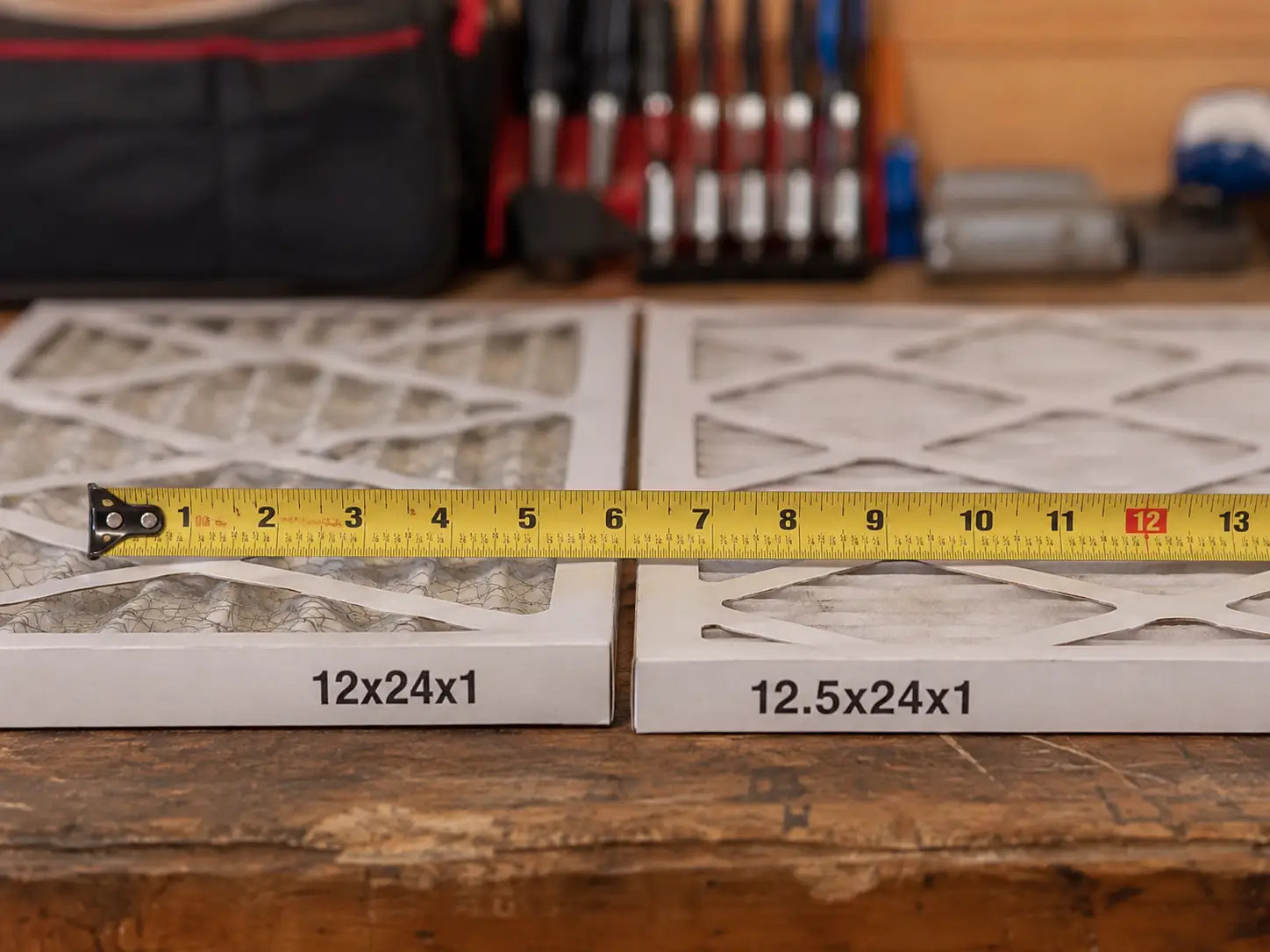
- A 12.5x24x1 filter is cut near its stated size, while a nominal 12x24x1 measures about 11.5 by 23.5 inches, leaving an inch of open edge if substituted.
- Older furnaces and manufactured homes often use half inch rack widths big box stores do not stock.
- Round tape readings are nominal and you order the label. Fractional readings are exact cut and you order the number itself.
What Is A 12.5x24x1 Air Filter?
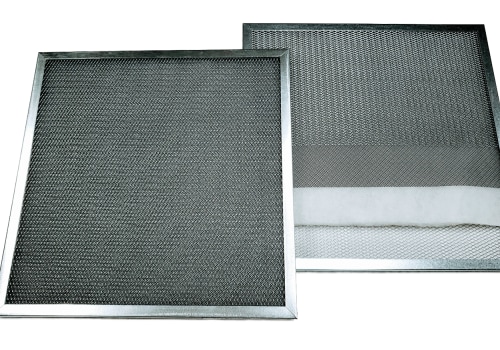
A 12.5x24x1 air filter is a one inch pleated filter measuring about 12.5 by 24 by 0.75 inches, used in racks never built to a rounded dimension. It is one of a family of half inch sizes in older equipment, stocked by filter makers rather than retailers. Fit is what turns any of them into cleaner air throughout your home.
The number that surprises people is never the one on the label. Most residential sizes are nominal, and the gap between a label and an actual measurement is where sizing mistakes start. A filter sold as 12x24x1 is cut to about 11.5 by 23.5 inches, since clearance is needed to slide it in. Half inch sizes work differently. Filterbuy lists the actual size of this filter as 12.5 by 24.0 by 0.75 inches, close enough to the label to change how you order. That gap matters more than the half inch in the name, much as the third number in a filter size decides whether it seats or sits loose.
Drop a nominal 12x24x1 into a true 12.5 inch slot and the filter measures about 11.5 inches wide, leaving an inch of open edge for air to slide past. A hands on sizing walkthrough runs the same check on a stocked size.
How Do I Confirm My Rack Is Really 12.5x24x1?
Measure the slot itself, not just the old filter. Legacy racks were often fitted with whatever a previous owner could find, so the installed filter proves little. Here is the sequence I run on every unfamiliar rack:
1. Shut the system off at the thermostat before opening any panel.
2. Slide the old filter out and measure its frame to the nearest eighth.
3. Measure the slot with the filter removed. This number governs, since it is the space you are filling.
4. Compare. If the slot reads 12.5 by 24 and the old filter reads smaller, it was undersized.
Filterbuy, an American manufacturer producing residential HVAC filters in more than 600 sizes, publishes an actual size beside the nominal label. That 12.5x24x1 air filter listing with the measured dimensions shown lets you check your tape reading before ordering, since two filters with the same label can be cut differently. If you are weighing a rating too, testing your indoor air first narrows the choice.
Turning A Tape Reading Into An Order
Here is the rule that decides the purchase. Getting it backwards is the failure I see most:
1. Whole numbers on the tape mean a nominal size. Order the label, not the measurement. The filter arrives half an inch smaller on purpose.
2. A half or quarter inch on the tape means an exact cut size. Order the measurement itself. Round down here and you lose an inch of edge.
3. Check the fit by hand. It should slide in with light resistance and sit flat. A fingertip at the edge means too small, a bowed frame too big.
A rack between conventions is not a dead end. Manufacturers such as Filterbuy cut to order, and a made to measure filter that seals beats a stocked one that rattles.
Why Do Older And Manufactured Homes Use Nonstandard Filter Rack Sizes?
Legacy HVAC filter dimensions exist because slots were sized to the cabinet or return grille, not a retail chart. Older furnaces and factory built homes were designed around available cabinet dimensions, and the opening landed wherever the metal fell.
Manufactured and mobile home systems add their own history. A manufactured home furnace filter often sits in a door mounted holder rather than a slot, and makers cut foam or mesh to sizes no shelf carries. The racks that trouble me most are retrofits, where a new air handler behind an untouched return grille leaves an opening matching neither.
The nameplate size, if there is one, may not describe your slot. The slot is the authority, which is why reading filter measurements correctly matters more on legacy equipment.
What Happens When You Round Down To A Standard Size
Filter bypass is what happens when a filter runs too small. Air takes the path of least resistance, so a gap at the frame edge sends return air around the media, carrying dust to the blower wheel and coil.
The EPA makes the same point in its guide to air cleaners in the home, advising that a filter fit snugly and never be bent to fit. A high MERV filter with a one inch gap performs worse than a modest one installed tight, since the rating covers only air passing through the media.
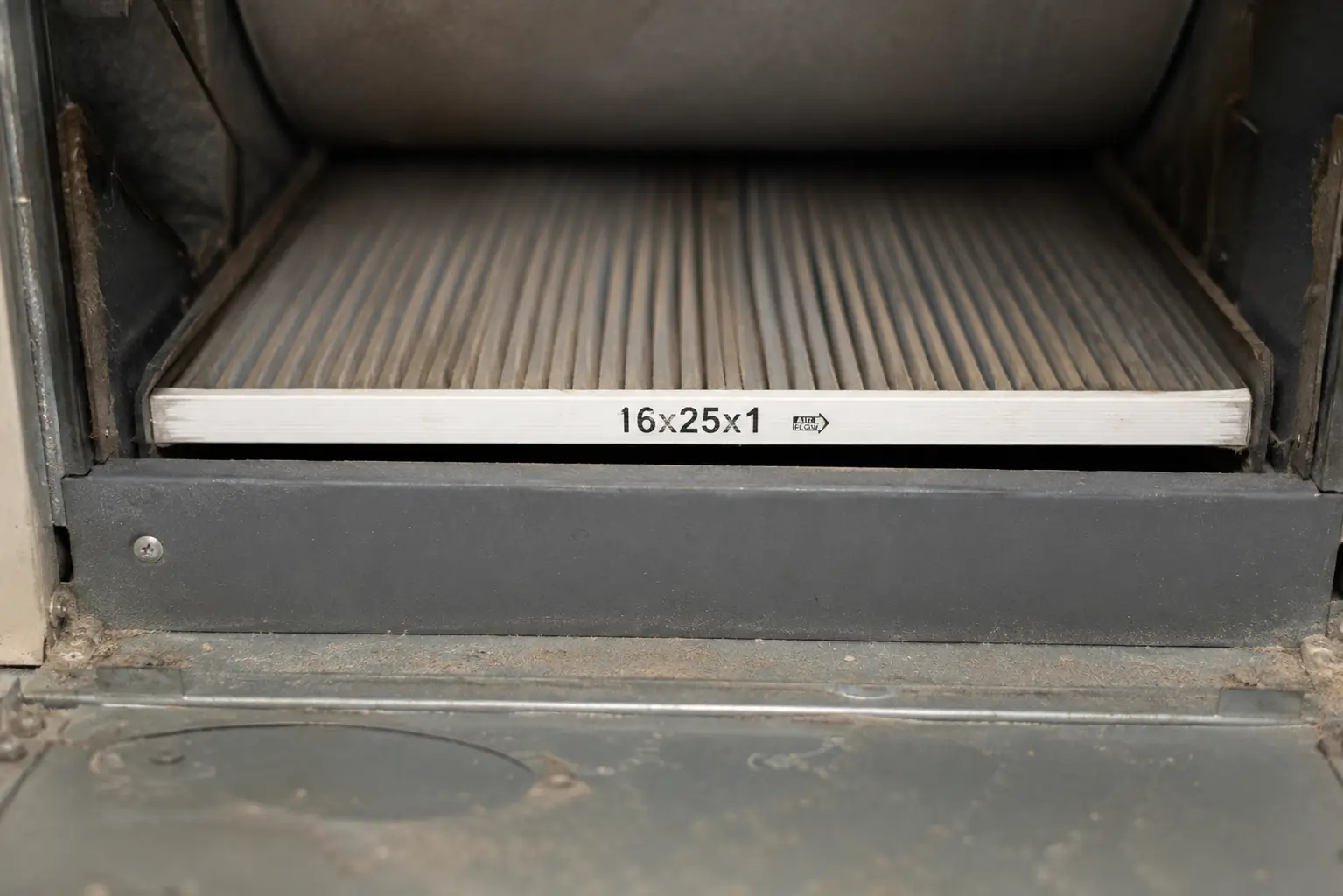
When I find a gap it is nearly always on the width, because that is the dimension people round. Shims and tape are temporary, since they shift as the cabinet cycles hot and cold.
Which MERV Rating Suits An Older Blower?
Choose the highest MERV rating your system can move air through, once you know what the ratings actually mean, then confirm it does not starve the blower. The EPA suggests at least MERV 13, or as high as the fan and slot will take, and notes most systems handle MERV 13 provided the filter is replaced often enough.
Older equipment deserves a check. The Department of Energy's guidance on high MERV filters notes a system must accommodate the pressure drop of higher MERV media, a real issue for aging blowers. A 12.5 by 24 inch opening is a small face area, so it loads faster. This clear guide to filter efficiency lays out the ranges side by side.
On legacy equipment I install the higher rating, then watch the registers over two cycles rather than the filter. If airflow drops, step down. You can step up to pleated media without changing depth, and this look at choosing a filter that performs covers what to check. To sort HEPA from MERV, start with understanding higher efficiency filtration, then the case for better protection for allergy sufferers.
What I Tell People Who Ask About This Size
"The mistake I see most often is not the wrong rating. It is the right rating in the wrong width. A filter that leaves a finger width of daylight at the edge of the rack is filtering nothing on that side, whatever the box claims."
Seven Resources That Settle Your 12.5x24x1 Filter Decision
These seven cover what comes next.
Find The Filter Before You Order Anything
The Department of Energy's Energy Saver maintenance guide shows where filters sit and sets change intervals.
Best for: Finding the filter slot.
Judge Whether Your Rack Is Built Correctly
This guide to proper filter installation explains why racks must be airtight and sized correctly.
Best for: Judging whether a loose rack needs work.
Change A Slot Mounted Filter Without Guessing
This photographed step by step covers the configuration most 12.5x24x1 racks use.
Best for: A first change on unfamiliar gear.
See The Measurement Data Behind MERV Ratings
The EPA's air cleaners and filters hub collects its consumer and technical guidance.
Best for: Readers wanting testing data, not marketing.
Understand What A Filter Upgrade Does For Health
The American Lung Association's air cleaning guidance explains what a filter upgrade can and cannot do.
Best for: Setting expectations before paying more.
Build A Filter Routine Around Allergies Or Asthma
The Asthma and Allergy Foundation's indoor air quality guidance sets filter changes inside an allergen plan.
Best for: Homes reacting to dust or pollen.
Check What Your Manufactured Home Was Required To Have
Subpart H of the federal manufactured home standard sets requirements for heating and cooling equipment.
Best for: Tracing what a factory built system required.
Supporting Statistics
1. 88% of U.S. homes use air conditioning.
- Covers an estimated 123.5 million homes.
- Almost all pull air through a filter rack.
- A rack matching no stocked size is common.
- Source: U.S. Energy Information Administration, 2020 RECS
2. 10.5 million U.S. adults live in mobile homes.
- These systems hold many legacy racks.
- Half inch sizes were built for such openings.
- Source: Consumer Financial Protection Bureau, 2022
3. 6.5% of U.S. children under 18 have asthma.
- In those homes the rating matters.
- The seal matters just as much.
- Source: CDC National Center for Health Statistics, 2024
Glossary
12.5x24x1 air filter. A one inch pleated HVAC filter for racks near 12.5 by 24 inches, cut close to its label rather than a half inch under.
Nominal size. The rounded dimension on a filter label. It describes the intended slot, not the frame you receive.
Actual size. The measured dimensions of the frame. Usually half an inch under the nominal label, though half inch sizes such as 12.5x24x1 are cut close to it.
Filter bypass. Return air traveling around a filter rather than through it, caused by an undersized or bowed frame.
Frequently Asked Questions
Can I use a 12x24x1 filter in a 12.5x24x1 rack?
Not without leaving a gap. A nominal 12x24x1 measures about 11.5 inches across, roughly an inch narrower than a 12.5 inch slot, leaving an open edge for air to bypass the media.
Is 12.5x24x1 a mobile home air filter size?
It is one of several half inch sizes in older and factory built systems, though not exclusive to them. Measure your slot rather than assuming from the home type.
Should I have the rack modified?
Sometimes, during equipment replacement. A wider return changes airflow, so it is a technician's call. If another return takes a slim filter, a slim profile size that seals cleanly may suit.
How often should this filter be changed?
ENERGY STAR heating and cooling guidance advises checking monthly and replacing at least every three months. A small face area loads faster, so inspect rather than trust the calendar. Staying on a steady change schedule keeps airflow strong.
Can I buy this size outside the United States?
Yes. North of the border there are cleaner air options for Canadian homes in the same depth.
What To Do Next
Take a tape measure to your slot this week. Write the dimensions inside the access panel so nobody guesses again.
With size settled, weigh a filter you can rely on against real world filtration comparisons. Keep spare filters on the shelf and the next change is easy. An affordable pleated upgrade raises capture without changing depth. If your system is rated for it, a deeper filter that stretches time between changes or higher efficiency media for sensitive households earns its keep.
Have a rack that matches nothing? Leave a comment with the measurement and brand and I will help you work out what fits.
Learn more about HVAC Care from one of our HVAC solutions branches…
Filterbuy HVAC Solutions - Miami FL - Air Conditioning Service
1300 S Miami Ave Apt 4806 Miami FL 33130
(305) 306-5027